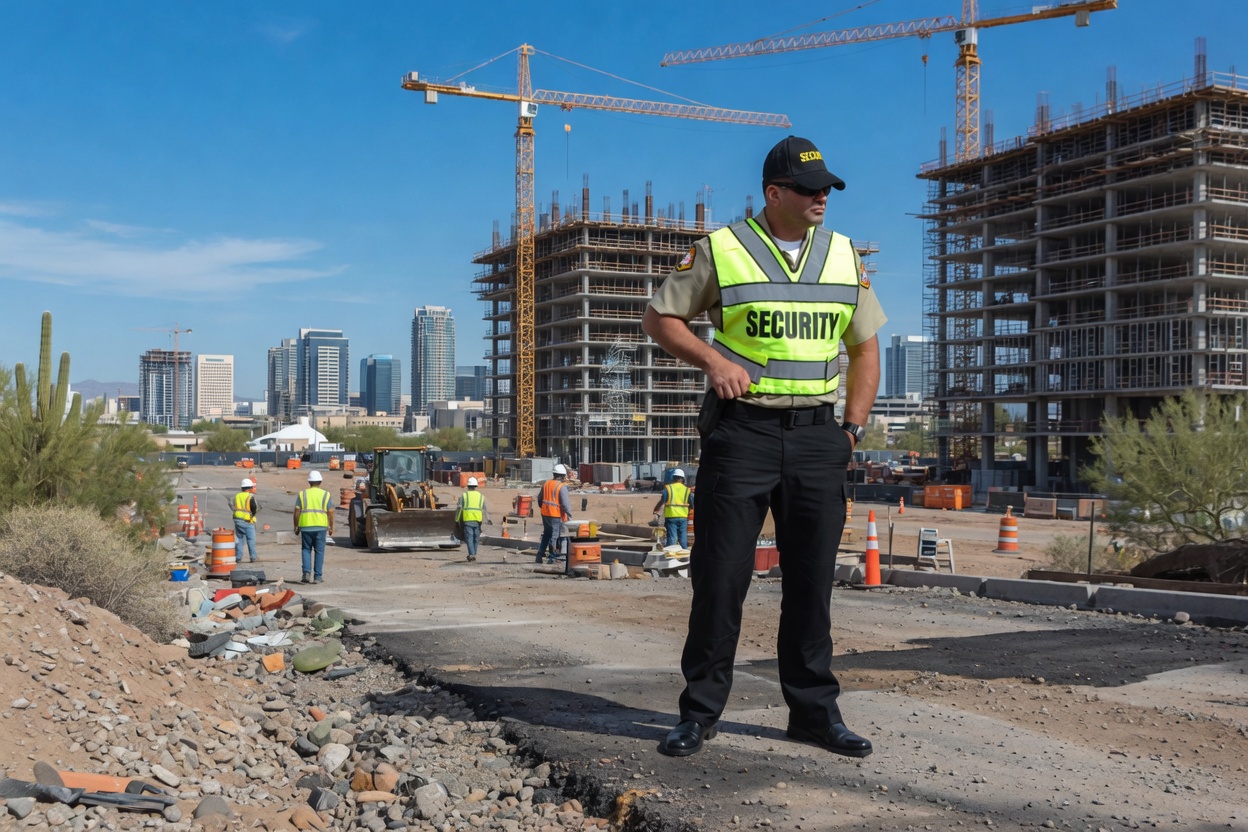
When a Phoenix business owner starts shopping for security, the temptation is understandable: get three bids, pick the lowest one, move on. It feels like smart budgeting. But in the security industry, the cheapest option rarely stays cheap for long — and in a market like Phoenix, where property crime rates rank among the highest of any major U.S. city, the stakes of getting this wrong are simply too high.
Here's what the low-bid security companies in Phoenix don't put in their proposals: the cost of a no-show guard, the liability exposure from an undertrained officer, the management hours your team spends babysitting a vendor that was supposed to solve a problem. Those costs don't show up in the contract. They show up later, on your bottom line, and sometimes in an incident you could have prevented.
Why Phoenix Is Not the Place to Gamble on Security
Phoenix presents a unique risk profile. The greater Phoenix metro has one of the highest rates of property crime in the country — higher than Chicago, Dallas, and Houston. Car break-ins, retail theft, construction site vandalism, and commercial burglaries are persistent, year-round challenges across the Valley, from Chandler and Gilbert to Scottsdale and the downtown core.
That environment demands security that actually works. And "working" means more than a uniformed body standing at a door.
A professional phoenix security guard does more than observe. They deter. They de-escalate. They document incidents with precision, respond to situations with trained judgment, and communicate proactively with management. A guard hired through a company that competes on price alone — paying minimum wage, skipping site-specific training, cutting corners on vetting — does almost none of that reliably.
The Hidden Costs of Going Cheap
1. Guard No-Shows and High Turnover
Low-cost security guard companies in Phoenix compete on price by keeping labor costs as low as possible. That means paying guards minimum wage or just above it, offering no meaningful career development, and providing little accountability when guards don't show. The result is an industry-wide turnover problem — and at the worst vendors, it's severe.
When a guard doesn't show up, someone has to deal with it. Usually, that someone is you or a member of your management team. You spend time on the phone, you adjust coverage on the fly, and your property goes unprotected during the gap. The hours your team loses to vendor management are real costs — they just don't appear on the security invoice.
2. Inadequate Training Creates Liability
Arizona requires security guards to meet baseline licensing standards, but reputable security guard companies in Phoenix go far beyond the minimum. Site-specific training — meaning guards who actually understand your property's layout, your incident protocols, your access control procedures, and the unique risks your business faces — is what separates professional officers from generic security presence.
An undertrained guard who mishandles a confrontation, fails to document an incident correctly, or responds to an emergency without proper procedure doesn't just create a security gap. They create legal exposure. If an incident leads to a lawsuit, the quality of your security vendor's training program will be scrutinized. "We went with the cheapest option" is not a defense your attorney will enjoy presenting.
3. Reactive, Not Proactive Security
Professional phoenix security guards are trained to be proactive — identifying vulnerabilities before incidents occur, recognizing patterns, adjusting behavior based on their knowledge of your site. Guards hired by low-cost vendors are often told to stand in a spot and report problems after they happen. That's the difference between deterrence and documentation.
In a high-crime market like Phoenix, reactive security is expensive security. Every incident that wasn't prevented costs you: in stolen inventory, damaged property, increased insurance premiums, lost productivity, and the intangible cost of your team's sense of safety.
4. Poor Communication and Accountability
One of the most common complaints Phoenix businesses have when they switch to SecureOne from a low-cost provider is about communication — or the lack of it. With many budget security guard companies, reaching a supervisor is difficult, incident reports are vague or nonexistent, and problems that should be flagged to management simply aren't.
Quality security companies invest in reporting technology. SecureOne uses Patroltrac, a digital reporting platform that provides real-time incident documentation, transparent logs, and accountability that property managers and business owners can actually see and use. That kind of visibility has real value — one of SecureOne's Phoenix HOA clients noted that the technology alone saved tens of thousands of dollars in management time. You don't get that from the low-bid vendor.
5. Management Time Is a Real Cost
This one is underestimated almost universally. When you hire a security company that underperforms, your internal team absorbs the slack. Operations managers field calls about coverage gaps. Facility managers handle complaints that the guard didn't address. HR gets involved when an incident wasn't handled correctly. Ownership spends time re-evaluating a vendor they just signed a contract with.
Every hour your team spends managing a bad security vendor is an hour not spent running your business. When you add up those hours across a year and multiply by fully-loaded labor costs, cheap security stops looking cheap very quickly.
What Quality Actually Costs — and What It Saves
SecureOne is transparent about this: we are not the cheapest security guard company in Phoenix. We compete on quality, not price. Our clients understand that and choose us anyway — because the math works.
Around 70% of SecureOne's new clients come from referrals. That number tells a story. Businesses that have experienced the true cost of low-bid security — the no-shows, the liability exposure, the management burden — and then switched to SecureOne don't go back. One major transportation client in our network put it plainly: "I get security companies in here all the time trying to sell me their services. I don't bother, because in eight years with SecureOne I have never had a serious security-related incident on my property."
Eight years. Zero serious incidents. That is what quality security delivers.
If you're evaluating security guard companies in Phoenix, here are the questions that separate professional vendors from budget providers:
What does your training program look like beyond state minimums? Arizona's licensing floor is a baseline. Ask specifically about site-specific training, de-escalation, emergency response, and ongoing professional development.
What is your guard turnover rate? High turnover is a direct indicator of low pay and poor management — both of which affect the quality of service you receive.
How do you handle a no-show? Every company will claim they have a backup plan. Ask for specifics: who gets called, what's the response time, and how often does this actually happen?
What technology do you use for reporting and accountability? Real-time reporting platforms, GPS-tracked mobile patrols, and incident documentation tools are the mark of a company that's invested in delivering accountable service.
What are your insurance limits? Adequate liability coverage protects you. Low-cost vendors often carry minimal insurance — fine until something goes wrong.
Can you provide references from Phoenix-area clients? Local references from businesses in similar industries to yours are the most relevant proof point available.
The Bottom Line
In Phoenix's security market, you get what you pay for and often, you pay for what you didn't get. The short-term savings of a low-bid security contract are routinely erased by turnover-driven coverage gaps, liability from undertrained guards, and the internal management burden your team absorbs when a vendor doesn't deliver.
Professional security is an investment in the safety of your people, the protection of your assets, and the operational stability of your business. SecureOne has been providing that investment to Phoenix businesses for over 20 years — with the client retention, referral rates, and zero-incident track records to prove it.
If you're ready to stop paying the hidden costs of cheap security, contact SecureOne today for a free consultation. We'll assess your property, understand your risks, and build a security plan that actually protects your business.