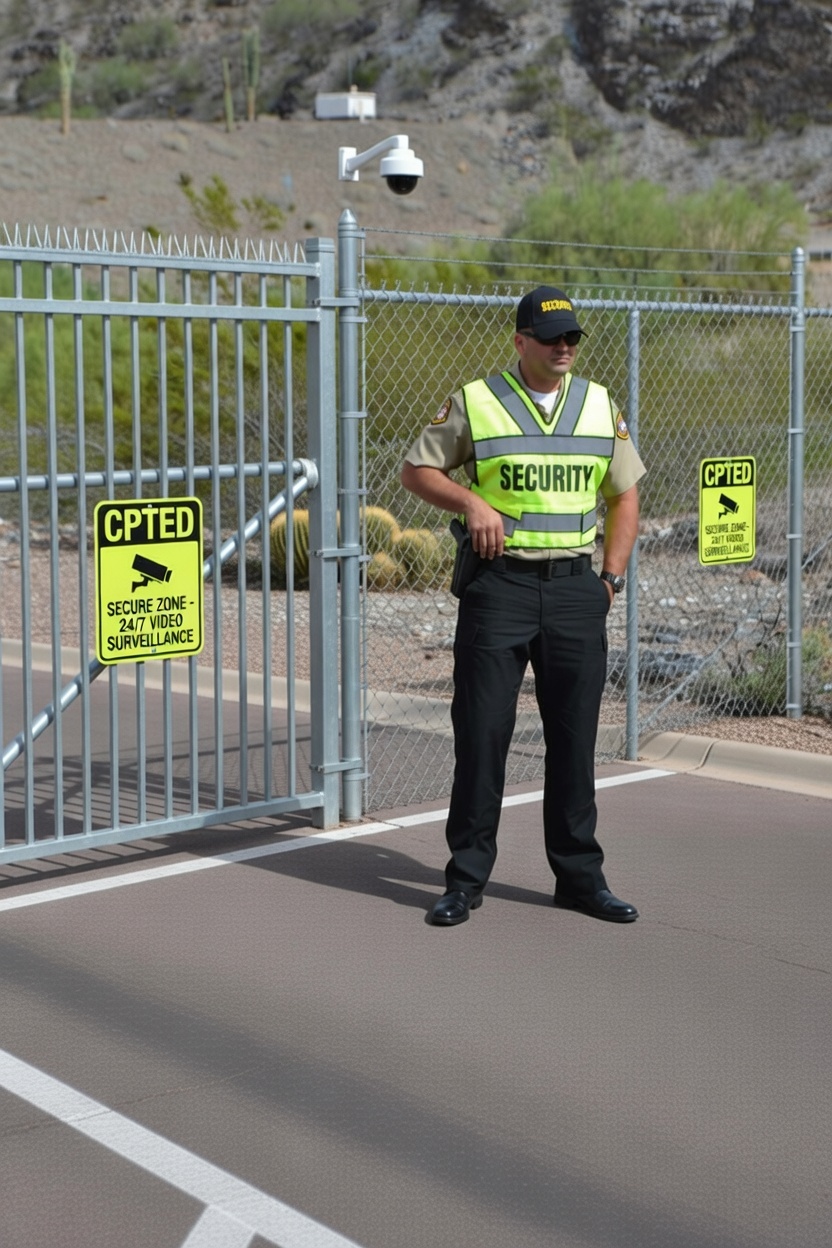
In the bustling industrial landscape of Phoenix, AZ—home to expansive warehouses, manufacturing plants, distribution centers, and logistics hubs—workplace safety goes hand-in-hand with effective security. Industrial facilities face unique challenges, from high-value inventory theft and unauthorized access to workplace violence, active shooter scenarios, and emergencies exacerbated by the desert climate, such as heat-related incidents or dust storms impacting visibility.
While physical security measures like fencing and alarms are essential, integrating Crime Prevention Through Environmental Design (CPTED) principles can dramatically enhance both day-to-day safety and emergency response. CPTED focuses on using the built environment to naturally reduce crime opportunities, deter threats, and foster a sense of ownership and vigilance. Leading security guard companies in Phoenix emphasize CPTED-trained staff who understand these principles to create safer workplaces.
Core CPTED Principles Applied to Phoenix Industrial Settings
CPTED revolves around four key principles that align perfectly with industrial security needs:
- Natural Surveillance Maximize visibility to discourage criminal activity and improve incident detection. In Phoenix warehouses and manufacturing plants, position loading docks, entrances, and high-traffic areas with clear sightlines. Avoid blind spots by trimming landscaping to under 3 feet and keeping tree canopies at least 8 feet high. Strategic lighting eliminates shadows around perimeters, parking lots, and rear areas—critical in low-activity off-hours when many industrial sites are isolated. Well-placed windows or elevated observation points allow employees to monitor exterior spaces naturally.
- Natural Access Control Guide legitimate movement while deterring unauthorized entry. Use fencing, bollards, gates, and signage to clearly define public, semi-private, and restricted zones. In Phoenix's sprawling industrial parks, channel vehicle and pedestrian traffic through designated entrances with visitor screening. Avoid ambiguous rear alleys or service areas that invite trespassing. CPTED encourages designs that make intruders feel exposed and at risk.
- Territorial Reinforcement Foster a sense of ownership to signal that the space is actively managed. Clear signage, branded fencing, maintained grounds, and defined boundaries (like pavement treatments or low walls) communicate "this area is watched and cared for." In industrial facilities, this reduces vandalism and loitering by making potential offenders perceive higher detection risk.
- Maintenance and Management Prompt upkeep demonstrates control and discourages disorder. Regularly remove graffiti, repair broken fixtures, trim overgrown vegetation, and ensure consistent lighting. Neglected areas signal tolerance for crime, while well-maintained sites in Phoenix's dusty environment project vigilance and deter opportunistic threats.
The Critical Role of Trained Phoenix Security Guards in CPTED and Emergency Preparedness
Phoenix Security Guard professionals trained in CPTED go beyond static patrols—they actively apply these principles during shifts. For example:
- Conducting site walks to identify and report surveillance blind spots or access vulnerabilities.
- Monitoring for maintenance issues that could compromise safety, such as overgrown shrubs blocking views or malfunctioning lights.
- Reinforcing territoriality by engaging with employees, escorting visitors, and ensuring clear signage is visible.
In emergencies, this training proves invaluable:
- Workplace Violence and Active Shooter Scenarios — CPTED-trained guards know how to use natural surveillance (e.g., clear sightlines) and access control to guide evacuations, lock down zones, and coordinate with first responders. They practice scenario-based drills focusing on rapid communication and safe egress routes.
- Evacuations and Fire Watch — In manufacturing plants with hazardous materials, guards trained in CPTED principles ensure clear pathways and visibility during drills or real events. They integrate fire watch duties with patrols, using well-lit perimeters to spot issues early.
- Daily Safety Protocols — Guards perform risk assessments aligned with CPTED, checking for hazards like unsecured high-value storage or poor lighting in employee parking areas. In Phoenix's extreme heat, they monitor for heat stress during patrols and ensure shaded, visible rest areas.
Reputable security guard companies in Phoenix prioritize ongoing training in CPTED, Arizona-specific regulations (like licensing and workplace safety standards), and emergency response. This includes certifications in first aid, active shooter response, and de-escalation, combined with site-specific drills.
Partnering with Experienced Security Guard Companies in Phoenix
For Phoenix businesses in industrial sectors, selecting a Security Guard Phoenix provider with CPTED expertise means building layered protection. Start with a comprehensive risk assessment incorporating CPTED audits, then layer in trained guards who reinforce these environmental strategies. This proactive approach not only deters threats but also boosts employee confidence, reduces liability, and supports smoother operations amid the Valley's industrial growth.
Ready to enhance your facility's safety? Contact Secureone Security Services today, a trusted Phoenix Security Guard team today to discuss customized CPTED-integrated services that prepare your site for both routine patrols and high-stakes emergencies. A safer workplace starts with smart design and expert guardianship.